
Carrier adjustments shouldn’t come out of your margin
DIM corrections, reweighs, address corrections and residential surcharges land days after you’ve already billed your client. Rails matches every adjustment back to the order that caused it and the client who owes it.

Carriers reprice shipments after the fact, and the adjustment usually arrives after you’ve already invoiced the client.
How it works
Rails ingests the carrier invoice
Line by line, every carrier, on whatever cycle they bill you. No manual download, no spreadsheet.
Every charge is matched to its shipment
Each carrier line is tied to the shipment it belongs to, and to the client that shipment was for. That link is what makes rebilling possible.
Variances are rebilled, absorbed, or disputed
You set the rule per client: rebill on the next cycle, absorb anything under a threshold, or route it to dispute.
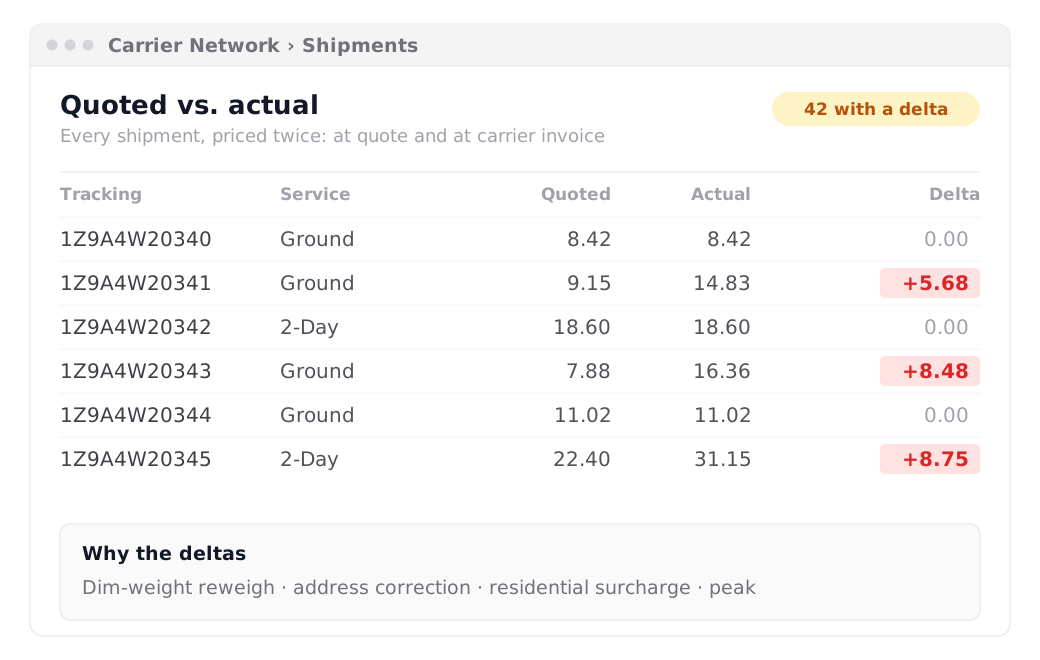
See the gap between what you quoted and what you were charged
Rails compares every carrier charge against the rate you expected and the amount you passed through to the client. Three numbers that should agree, and usually don’t.
- DIM weight corrections, reweighs, address corrections, residential and delivery-area surcharges
- Duplicate charges, charges for labels that were voided, and shipments billed twice
- Every variance carries a reason code and a link to the shipment
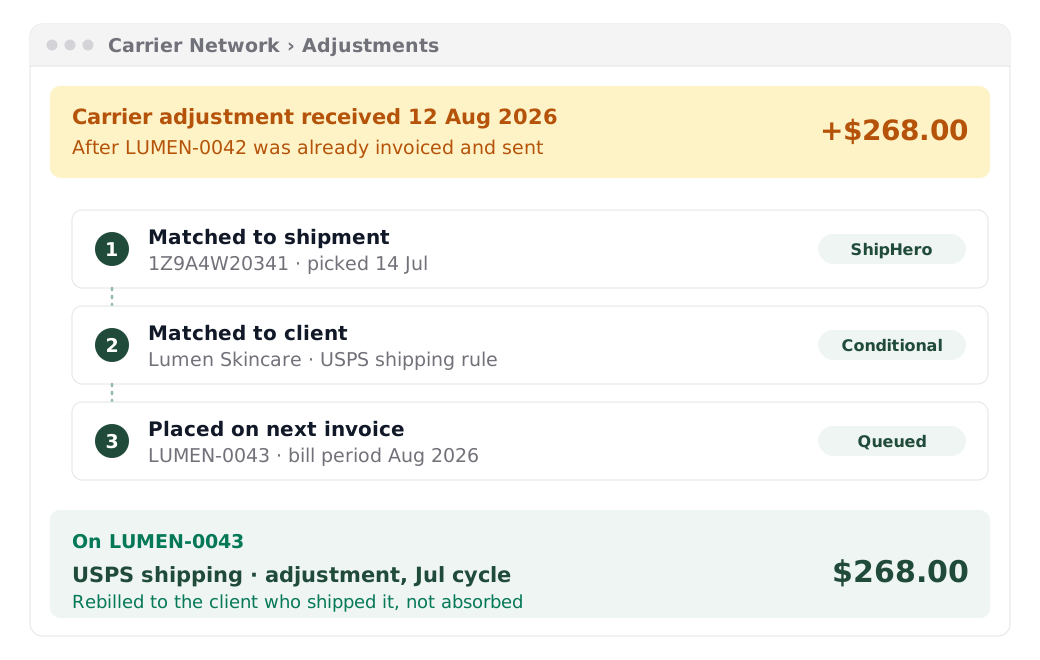
Rebill the adjustment to the client who caused it
Parcel audit tools are built for shippers: they find the overcharge and chase the refund from the carrier. A 3PL sits in the middle. The refund matters less than making sure the surcharge lands on the right client’s next invoice instead of your P&L.
- Adjustments flow onto the next invoice automatically, with the original shipment attached
- Per-client rules: rebill everything, rebill above a threshold, or absorb by agreement
- Your client sees the carrier’s own line, not a mystery charge from you
Find out which clients are actually profitable
Once every carrier charge is matched to a client, margin stops being a monthly guess. Most 3PLs find one or two accounts that have been underwater for a year.
- Margin by client, by service, and by lane
- The accounts whose shipping profile has drifted since you priced them
- The evidence to reprice at renewal, with the shipments to back it up

Works with the carriers you already ship with
Rails ingests carrier invoices alongside the shipment data already flowing in from your WMS and OMS, so every charge has a shipment to match against.
Carriers
Shipping platforms
WMS and OMS
Questions we get on every call
How is this different from a parcel audit company?
Audit firms work for shippers and take a share of the refunds they recover from the carrier. Rails works for you as the party in the middle: the priority isn’t the refund, it’s making sure the adjustment reaches the client’s invoice instead of your margin.
What happens when an adjustment lands after I’ve already invoiced?
That’s the normal case, and it’s what the rebilling rules handle. The adjustment flows onto the next cycle with the original shipment attached, or gets absorbed if it falls under your threshold.
Which carriers do you support?
FedEx, UPS, USPS, DHL, Stamps.com, Endicia, EasyPost, eHub, Passport, APC, ACI Logistix, BlueGrace, Cirro, DPD, Evri, FlavorCloud, iDrive, OnTrac, Parsel, Pitney Bowes, Purolator, Royal Mail, ShipBob, Shippo, ShipPros, ShipTrac, Shipwheel, ShipX, Tusk, Unishippers, UniUni, Veho, Worldwide Express and YSP, plus a custom integration for any other carrier you use today.
Do you take a percentage of what you recover?
No. We do not take a percentage of what we recover.
The rest of the platform
Payments
Payment portal for brands to pay the invoice Rails just built. Collect without leaving Rails.
Learn moreFree the untapped profit trapped in unreliable spreadsheets
