
Billing software that builds the invoice for you
Rails reads every billable event out of your WMS, carriers, and returns platform, prices it against the contract you loaded, and has the invoice built before your team opens a spreadsheet.
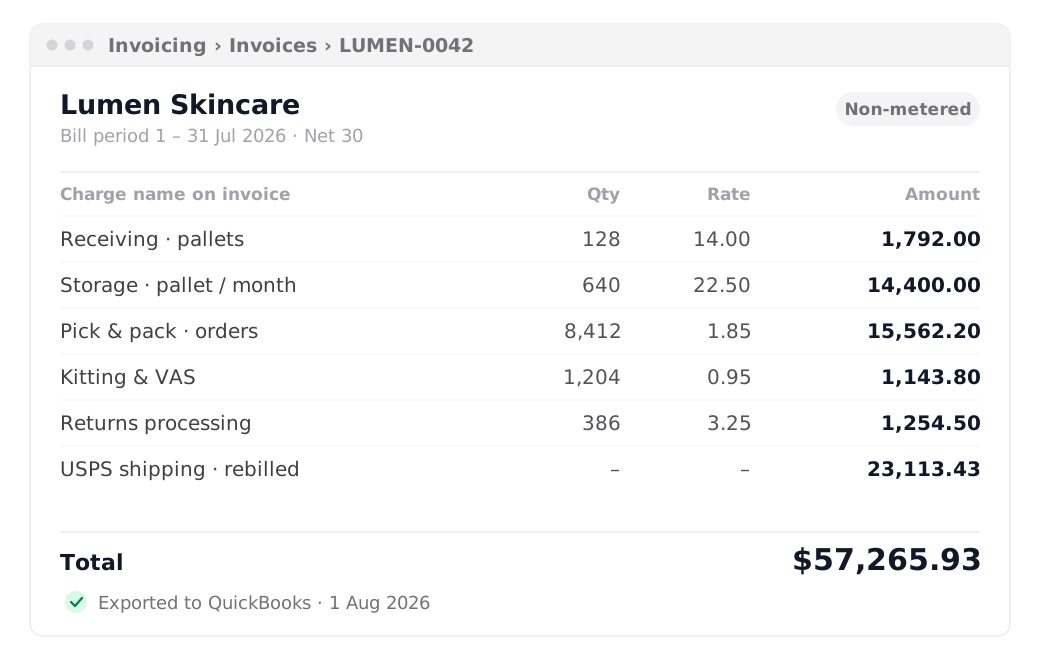
The average 3PL invoices one to three weeks late and loses 4–10% of revenue to charges that were billed incorrectly or missed altogether.
How it works
Connect your systems
Rails pulls receiving, storage, pick-and-pack, VAS, returns, and shipping data from your WMS, OMS, carriers, and returns tools. Pre-built integrations: no CSV exports, no nightly file drop.
Load your rate cards
Every client contract lives in Rails: tiered rates, volume discounts, monthly minimums, per-SKU pricing, one-off value-added services. Change a rate once and it applies everywhere it should.
The invoice builds itself
Every billable event becomes a priced line item the moment it happens. When the cycle closes, the invoice is already built, already itemized, already auditable.
Watch revenue accrue instead of finding out at month-end
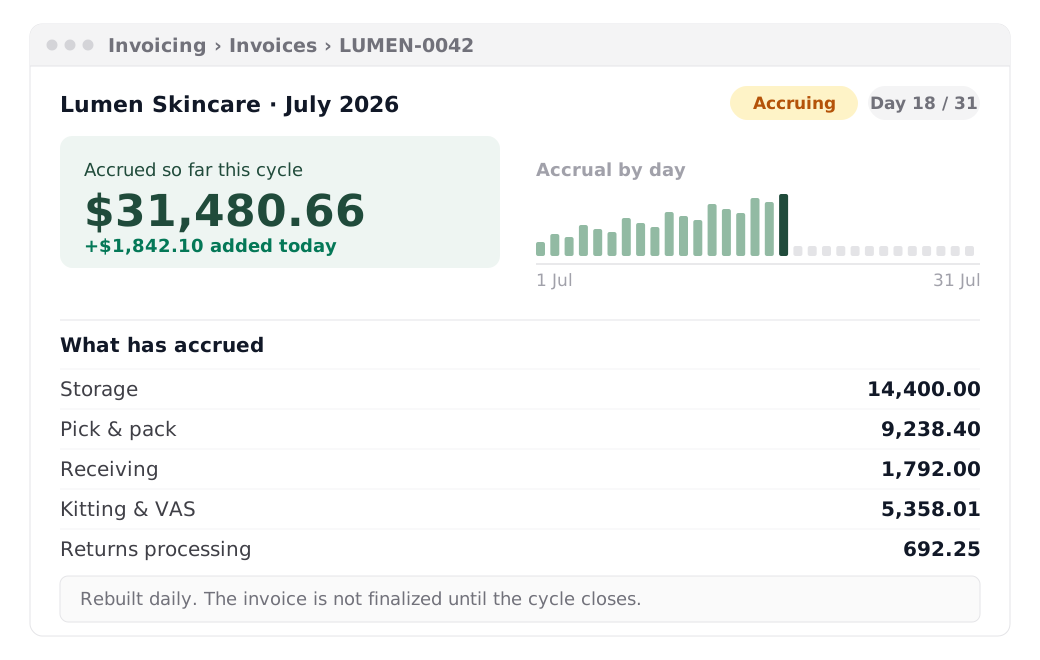
Most 3PLs learn what they should have billed after the period closes, by reconstructing it from exports. Rails prices each event as it happens and rebuilds the invoice every day, so your accounting team can see what’s accrued at any point in the cycle, before anything is finalized.
- Invoices regenerate daily, so finance sees the number mid-cycle rather than waiting for close
- Receiving, storage, pick-and-pack, kitting, VAS, returns, and freight: all on one line-item ledger
- Charges that normally get missed entirely: pallet moves, exceptions, special projects, rush handling
Rate cards that match the contract you actually signed
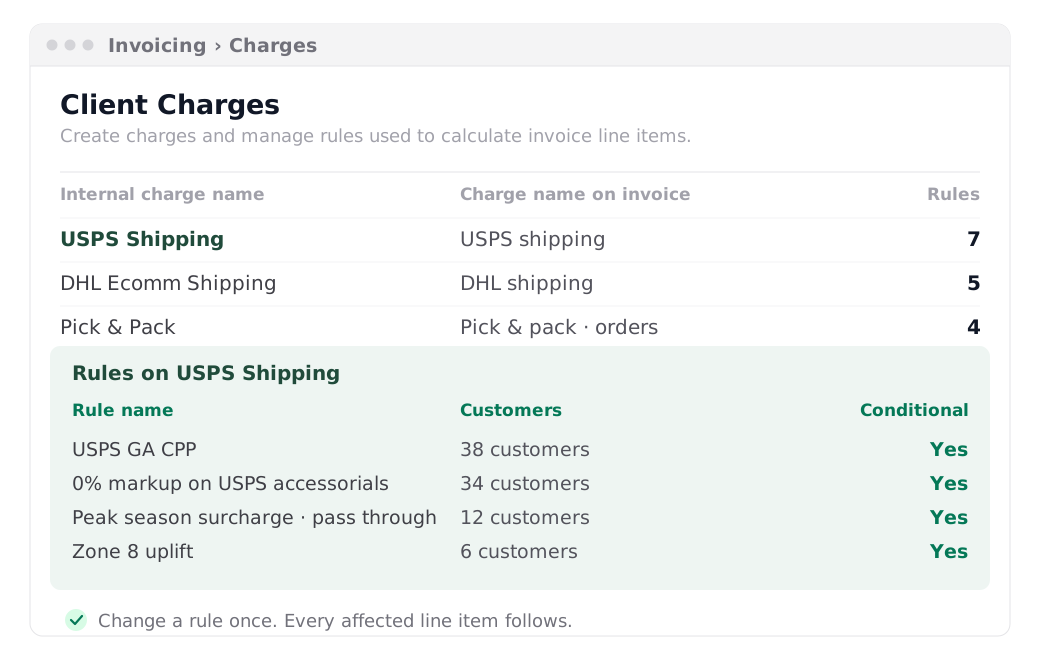
No two 3PL contracts look alike, which is exactly why billing modules built into a WMS fall over and everyone ends up back in Excel. Rails models the contract as written, including the parts that only apply in month three.
- Tiered and volume-based pricing, monthly minimums, and per-client SKU rates
- Effective dates, so a mid-quarter rate change doesn’t rewrite last month’s invoices
- Update a rate in one place and every affected line item follows
Every charge traceable, and already in your books
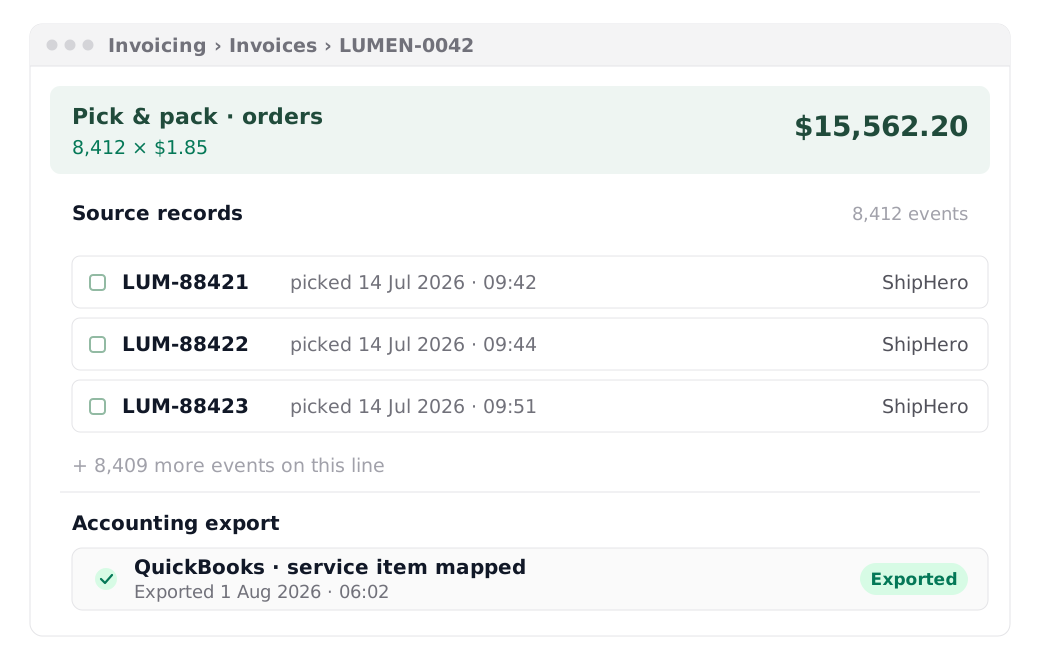
Billing disputes cost more in staff hours than in credits issued. Every Rails line item carries the record that produced it, so the answer to a client’s question is a link rather than an afternoon, and the finished invoice lands in your accounting system without anyone re-keying it.
- Live sync with QuickBooks, Xero, and Zoho Books: invoices, customers, and line detail flow through automatically
- Full audit trail from invoice line to the underlying order, receipt, or shipment
- Itemized detail your client can see, so questions arrive already answered
“Rails slashed our billing processing time by 90% … we can confidently say the tool has been a game-changer.”
Shivang Maheshwari, CEO, ShipMaestro
Built to sit on top of the systems you already run
Rails connects to your WMS, OMS, carriers, returns platform, and your books: QuickBooks, Xero, or Zoho Books. You don’t migrate anything.
Accounting
WMS and OMS
Carriers and shipping
Questions we get on every call
How long does implementation take?
Two to three weeks for most 3PLs. Connecting systems is fast; the time goes into modeling your rate cards correctly, which is the part that determines whether the invoices are right.
Do I have to replace my WMS or my accounting system?
Neither. Rails sits on top of your WMS and syncs finished invoices into QuickBooks, Xero, or Zoho Books. Nothing gets ripped out and nothing gets re-keyed.
My contracts are all different. Is that a problem?
It’s the reason Rails exists. Standardized contracts don’t need billing software; WMS-native modules handle those fine. Rails is built for the ones that don’t fit a template.
How accurate is it?
99%+ across the invoices Rails generates today. Where source data is messy, validation runs before the invoice goes out rather than after your client finds it.
The rest of the platform
Carrier Reconciliation
Catch every carrier adjustment and rebill it to the right client with automated rules.
Learn morePayments
Payment portal for brands to pay the invoice Rails just built. Collect without leaving Rails.
Learn moreFree the untapped profit trapped in unreliable spreadsheets
